Australia's Vocational Education and Training (VET) institutions are divided into two types: public Technical and Further Education (TAFE) colleges and non-public VET colleges. Public TAFE colleges are generally government-funded and managed. Non-public VET course providers include enterprise companies, private colleges, and professional organizations, which are privately owned and managed.
VET education is relatively unfamiliar to many people in China. VET (Vocational Education and Training), K12 education (kindergarten to high school), and Higher Education form the three pillars of Australia's education system. The number and scale of VET institutions even exceed those of higher education, demonstrating its recognition in Australia.
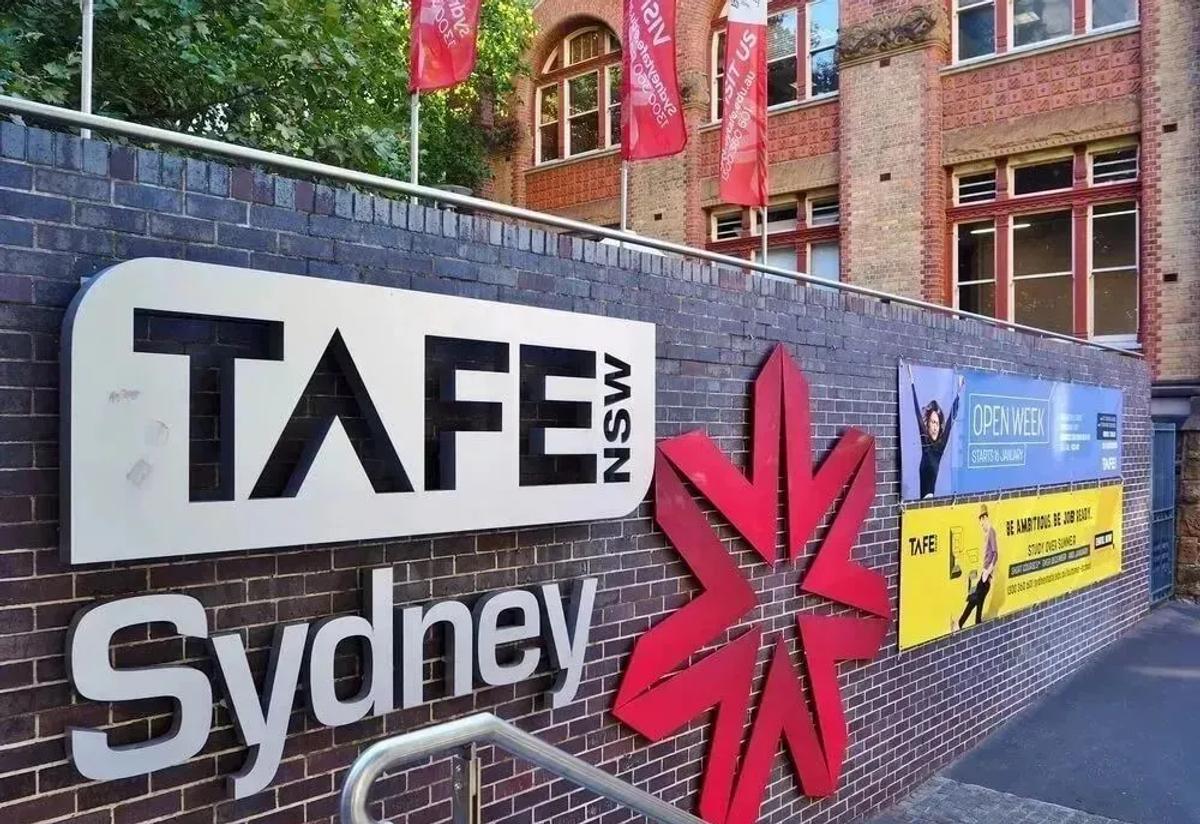
TAFE — The Public Option
TAFE stands for Technical and Further Education. It is funded and established by each state government in Australia, designed to provide students with more practical courses. There are 59 TAFE institutions across Australia, and some are larger than universities.

Private VET Colleges
VET stands for Vocational Education and Training. By institution type, VET includes both public (TAFE) and private options. There are far more private VET colleges to choose from, with over 5,000 government-registered private institutions offering VET courses. They vary in size, with the largest comparable to major TAFE institutions.
Are the Qualifications Recognized? How to Avoid Unaccredited Institutions?
Public TAFE qualifications are unquestionably recognized. But what about private colleges?
There is a straightforward way to determine whether a private college is legitimate. Any Australian educational institution that enrolls, admits, or teaches international students must be registered with CRICOS (Commonwealth Register of Institutions and Courses for Overseas Students), and every course offered to international students must be registered in the system.
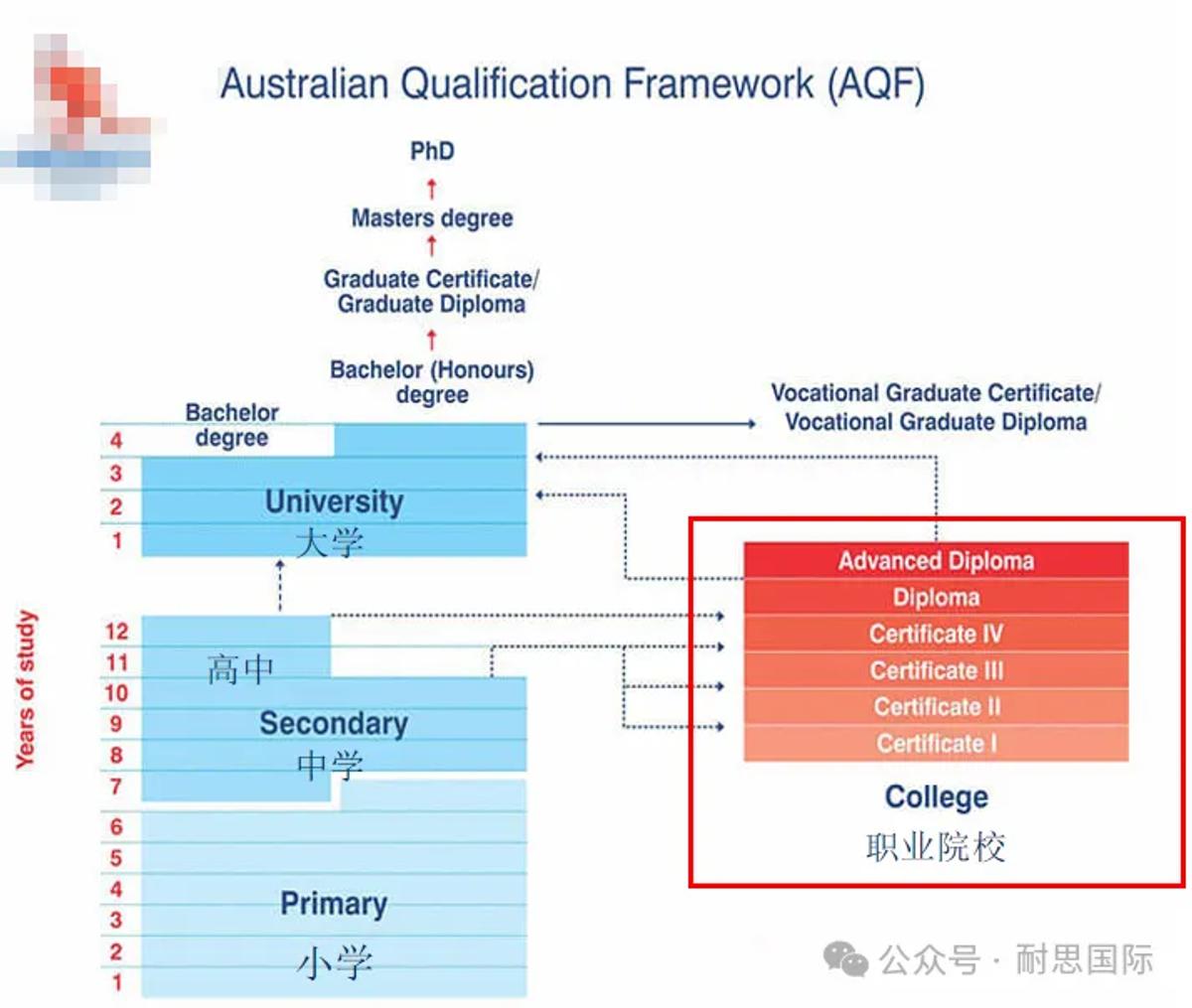
VET qualifications range from Certificate I-IV, Diploma, Associate Degree to Bachelor's degree, and all these credentials are recognized by the Australian government.

Application Difficulty: TAFE vs. VET
Public TAFE colleges have strict admission standards. Their courses are primarily designed for local Australian students to improve local employment rates, and the number of international students is limited.
Private VET institutions, on the other hand, have much easier admission requirements. China is currently classified as Level 1 in the SSVF risk assessment framework, meaning visa application requirements are relatively lower. Currently, VET student visa applicants do not need to provide proof of English proficiency or financial capacity, provided they are at least 18 years old and can meet basic tuition and living expenses.
VET admission and visa requirements are both lower than TAFE!

Tuition Fees: Public TAFE vs. Private VET
Public TAFE tuition is approximately AUD 15,000 per year, varying by program. Compared to Australian universities, TAFE fees are roughly 2.5-3 times lower. While an Australian university costs around 200,000+ RMB per year, TAFE is approximately 60,000-70,000 RMB per year.
Private VET tuition ranges from AUD 6,000-8,000 per year. Private colleges often offer installment payment options. For example, with AUD 6,000 annual tuition, you might pay every 3 months (AUD 1,500 per installment), or approximately AUD 115 per week.
Can TAFE Graduates Get a 485 Visa?
If you plan to study at TAFE for two years and then obtain a 1.5-year 485 Graduate Work visa, the occupation must be on the Medium and Long-term Strategic Skills List (MLTSSL). Occupations on the Short-term Skilled Occupation List (STSOL) do not qualify. For instance, although Vetassess assesses many occupations, only those on the MLTSSL are eligible for the post-study 485 visa.
Some migration occupations are assessed by Vetassess but are ineligible for the 485 visa because they are not on the MLTSSL.
Common occupations eligible for the 485 Graduate Work visa include Chef, Early Childhood Educator, Nursing, Automotive Mechanic, Carpentry, and Horticulture.
For occupations like Chef, Automotive Mechanic, and Early Childhood Educator that are assessed by TRA, in addition to completing a Certificate III/IV or Diploma in Australia, you must accumulate 360 hours of relevant professional work experience or supervised work placements.
Established and experienced TAFE institutions generally have no problem arranging these 360 hours of placement over two years. Paid part-time work during your studies can also count, as long as the work content meets the requirements.

VET courses cover a wide range of fields, spanning virtually all areas of practical employment. Chinese students can choose appropriate programs based on their goals. If migration is the objective, you can select programs aligned with state shortage occupation lists, such as Chef, Social Worker, Nurse, IT, etc. Keep in mind that shortage occupation lists change annually.
VET graduates earn an average annual salary of AUD 56,000 (approximately RMB 260,000), and 80% of VET graduates find employment within an average of 4 months after graduation. Their employment rate during the same period is actually higher than that of bachelor's degree graduates.
That concludes our introduction to TAFE and private VET colleges — hopefully you won't confuse them again!