Australia’s New National Innovation Visa (NIV): An In-Depth Analysis
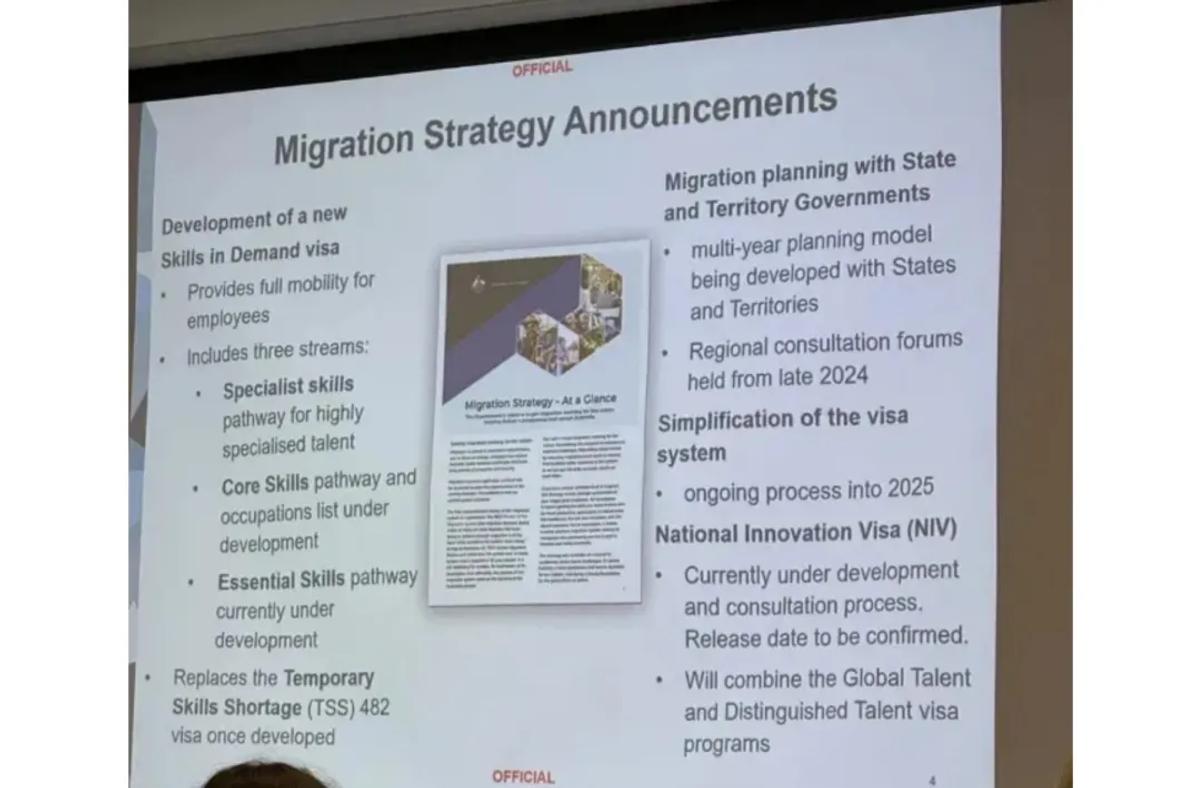
At the Migration Institute of Australia (MIA) conference held in Perth in late August, several major announcements were revealed:
1. The WA DAMA programme may become a long-term migration programme, with 5,000 places per year for the next 5 years.
2. Construction, healthcare, education, and hospitality and tourism services are priority sectors, with construction migration remaining particularly favourable.
3. Further legislation on worker protections will be introduced to combat exploitation and unfair competition.
4. The Skills in Demand visa will replace the 482 TSS visa.
5. The NIV will replace the GTI and investment migration pathways.
Today we focus on the fifth point — the details of the NIV.

Background and Objectives of the New Visa
Background: After extensive research, the Australian government found that the 188 class business investment migration and Global Talent Independent (GTI) programme did not contribute significantly to the economy. As a result, the government decided to pause these categories and introduce the new NIV to attract more highly skilled talent that will benefit economic development.
Objectives: The NIV aims to attract three key groups: Distinguished Talent, Global Talent, and Investor and Innovation (innovative investors and entrepreneurs), to jointly drive Australia’s innovation and economic growth.
Fields Covered by the New Visa
The NIV covers the following important sectors:
• Defence
• Energy and Resources
• Advanced Manufacturing and Engineering
• Clean Energy and Environmental Technology
• Digital Health and Biotechnology
• Data Science and Artificial Intelligence
• Agri-food and AgTech
• Circular Economy
• Infrastructure and Tourism
• Financial Services and FinTech
• Education
Application Requirements
Although full details have not yet been released, the NIV application requirements are expected to include:
1. Professional Skills: Applicants must possess outstanding professional skills and achievements in their respective fields.
2. Economic Contribution: Applicants’ economic contributions, such as business background and investment capacity, will be an important assessment factor.
3. Innovation Capability: Applicants’ innovation capabilities will also be a key assessment criterion.
Launch Timeline and Transition Arrangements
Launch Timeline: The NIV is expected to be launched between November and December 2024. The programme is currently undergoing public consultation and design development.
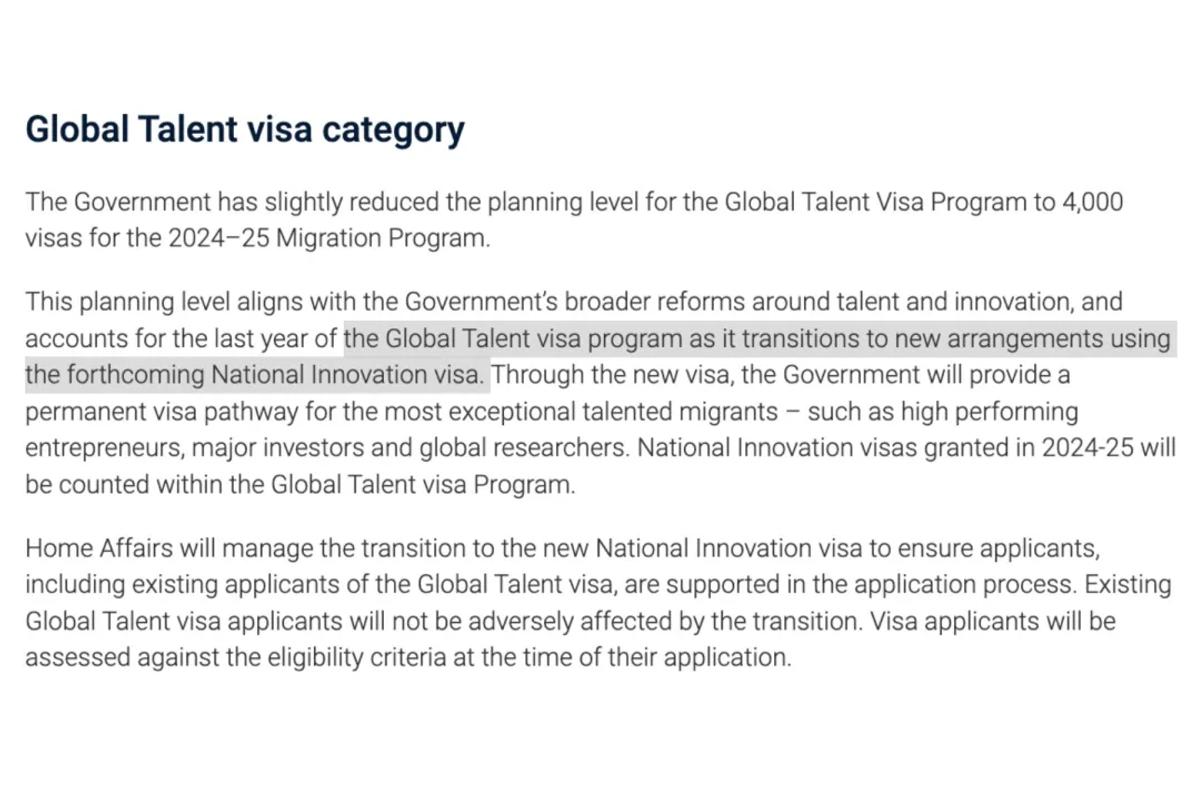
Transition Arrangements: For applicants who have already submitted GTI visa applications, their applications will be assessed against the criteria in place at the time of submission and will not be affected by the transition period. Meanwhile, the GTI visa programme cap for the 2024–2025 financial year has been reduced to 4,000 places, marking the final year of the programme.
The government has slightly reduced the 2024–25 Global Talent visa programme planning level to 4,000 visas. This planning level is consistent with the government’s broader reforms in talent and innovation, and takes into account the final year of the Global Talent visa programme’s transition to the new arrangements using the upcoming National Innovation Visa. Through the new visa, the government will provide a permanent visa pathway for the most outstanding talent migrants (such as high-performing entrepreneurs, major investors, and global researchers). National Innovation visas granted in 2024–25 will be counted within the Global Talent visa programme.
The Department of Home Affairs will manage the transition to the new National Innovation Visa to ensure applicants (including existing Global Talent visa applicants) are supported throughout the application process. Existing Global Talent visa applicants will not be adversely affected by the transition. Visa applicants will be assessed against the eligibility criteria in place at the time of application.

State Government Sponsorship and Priority Processing
Australian state and territory governments will have sponsorship authority for the NIV, and the federal government will prioritise processing applications with state government sponsorship. This arrangement ensures that visa issuance is closely aligned with the economic development needs of each region.
Conclusion and Recommendations
As a migration nation, Australia recognises the vital contribution of migrants to the economy. The introduction of the NIV undoubtedly provides new opportunities for highly skilled individuals seeking to migrate to Australia. We recommend prospective applicants use the coming time to strengthen their financial records, asset portfolios, and professional履历 to be ready to submit applications as soon as details are released, securing a valuable place. Noice International will continue to share the latest updates from the Department of Home Affairs to ensure applicants stay informed about NIV developments and requirements.