Australia’s Migration Policy Overhaul: 73 Recommendations Shaping the Future
Introduction
Recently, the Joint Standing Committee on Migration (JSCM) released its final report on the role of permanent migration in nation-building and development after nearly two years of in-depth research and analysis. This report not only reveals the significant contributions of migration to Australia’s economy, society, and culture, but also puts forward 73 far-reaching reform recommendations aimed at comprehensively optimising Australia’s migration system.
Key Highlights
Improvements to employer-sponsored visas, raising the age limit for the 186 employer-sponsored visa to 50.
Reform of parent migration visas, recommending the government suspend issuing these visas to new applicants.
Strengthened support for partner migration, providing more professional and comprehensive employment support and domestic violence response services.
Optimisation of skilled migration policy, recommending the Australian Government consider amending the Migration Act 1958 and the Migration Regulations 1994.
Measures to promote regional migration, increasing incentives for settling in regional areas to promote balanced regional development.
Rebuilding an independent Department of Immigration, Citizenship and Multicultural Affairs to better coordinate and manage migration-related work.
Reducing visa backlogs and improving service efficiency, establishing efficient mechanisms to reduce visa backlogs and modernise and simplify the visa system.
Adjusting occupational lists to better match market needs, recommending the abolition of existing skilled occupation lists in favour of an Australia Employment and Occupation List more aligned with labour market needs.
Strengthening refugee support and promoting social integration, helping refugees better integrate into Australian society and realise their potential.
Strengthening migration integration strategy and improving visa management efficiency through education programmes and cultural institutions.
Optimising biometric data and health requirements, reviewing English language requirements, recommending the government consider storing biometric data collected during visa applications for up to 12 months and piloting English language testing at higher education institutions to prevent fraud.
Addressing labour shortages by abolishing labour market testing and lowering barriers for businesses to recruit overseas talent.
01 Key Priorities: Migration and Visas
01 Employer-Sponsored Visa Improvements
The government should work towards improving the overall visa processing experience, including automating low-risk processes and providing applicants with real-time application tracking.
For the 186 employer-sponsored visa, it is recommended that the age limit be set between 50 and 60 to better match market needs and workforce conditions.
For applicants under specific circumstances, the government should consider exempting the age limit for the 186 employer-sponsored visa.
The government should consider implementing a post-employer fee system for all employer-sponsored visas as a pilot programme.
02 Parent Migration Visa Reform
Given the shortcomings in processing times for the current permanent parent visa system, it is recommended that the government suspend issuing these visas to new applicants and accelerate the development of a visa system more suited to family migration needs.
03 Strengthened Partner Migration Support
The government should provide more professional and comprehensive employment support and domestic violence response services for migrant women to protect their rights and interests.
04 Skilled Migration Policy Optimisation
It is recommended that the government amend the Migration Act 1958 and the Migration Regulations 1994 to ensure that the process by which the Minister or their delegate invites skilled independent migration visa applicants complies with relevant regulations.
In the points test (EOI), the skills and experience of secondary applicants should be more comprehensively considered to more fairly assess applicants’ overall capabilities.
The government should release more detailed information about skilled migration invitation rounds in a timely manner to help potential applicants make more informed decisions.
05 Regional Migration Promotion Measures
The government should review the definitions relating to regional areas in legislation and regulations to ensure the Department of Home Affairs maintains a consistent and comprehensive definition of regional areas to more effectively attract and retain migrant workers.
The government should work closely with state and territory governments to jointly promote the benefits of relocating to regional areas and raise public awareness.
Incentives should be developed to encourage migration to regional areas, with the government working with state and territory governments to drive implementation of relevant measures.
The government should develop incentives to promote the settlement and employment of healthcare professionals in regional areas.
Consider providing parent visa priority for international medical graduates working in regional areas to attract more outstanding talent.
The government should review designated area migration agreements and industry labour agreements to ensure they align with their intended purposes and actual needs.
02 Other Key Recommendations
1 Rebuilding an Independent Department
The report first recommends rebuilding an independent Department of Immigration, Citizenship and Multicultural Affairs to better coordinate and manage migration-related work. This initiative will help improve the development and implementation of migration policy, ensuring migration work proceeds in a more orderly and efficient manner.
2 Reducing Visa Backlogs and Improving Service Efficiency
Addressing visa backlogs, the report puts forward a series of recommendations including establishing efficient mechanisms to reduce visa backlogs and modernising and simplifying the visa system. These measures will significantly improve visa processing efficiency and provide applicants with a more convenient and efficient service experience.
3 Adjusting Occupation Lists to Match Market Needs
The report recommends abolishing existing skilled occupation lists and instead adopting an Australia Employment and Occupation List more aligned with Australia’s labour market needs. This adjustment will help ensure migration policy better serves Australia’s economic development needs and attracts more talent with practical skills.
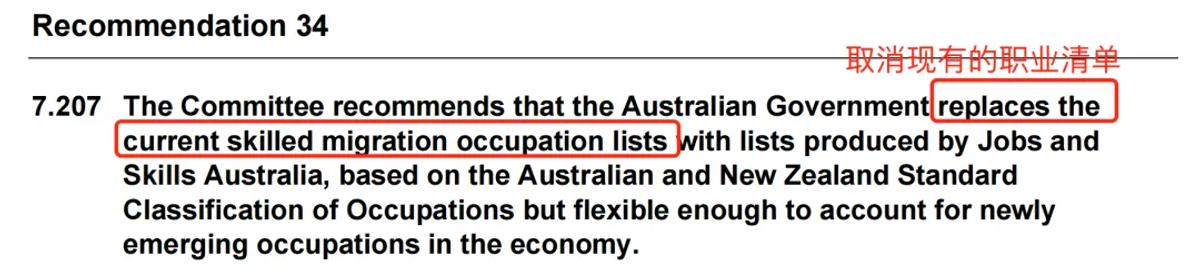
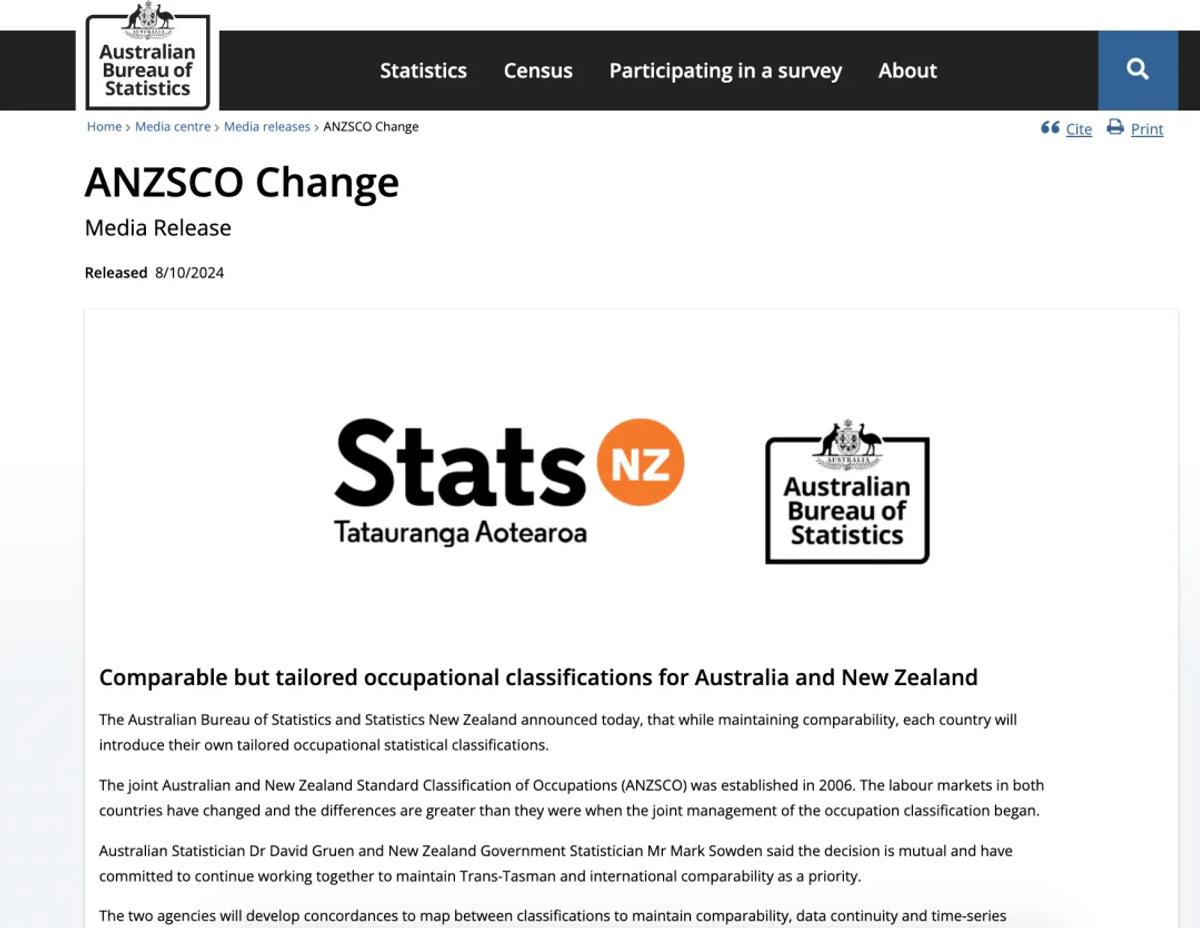
This recommendation has been partially adopted, with Australia’s new occupational classification system OSCA set to be announced on 6 December this year.
4 Strengthening Refugee Support and Promoting Social Integration
The report also pays particular attention to the employment and integration of refugee communities, proposing recommendations to strengthen recognition of refugee skills and qualifications and increase refugee employment assistance and services. These measures will help refugees better integrate into Australian society and realise their potential.

5 Strengthening Migration Integration Strategy and Improving Visa Management Efficiency
Furthermore, the report emphasises the importance of strengthening the migration integration strategy, recommending that the Australian Government work with states and territories to reinforce migration values through education programmes and cultural institutions and develop a unified intergovernmental strategy. It also proposes specific measures to improve visa management efficiency, ensuring visa management is more scientific and standardised.
6 Optimising Biometric Data, Health Requirements, and Reviewing English Requirements
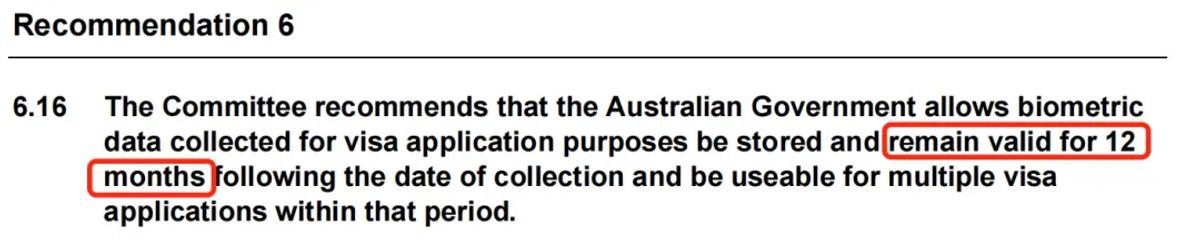
Regarding biometric data and health requirements, the report recommends the government consider storing biometric data collected during visa applications for up to 12 months and research the use of smart technology for biometric collection. It also explores public interest criteria related to health requirements and reviews English language requirements, piloting English language testing at higher education institutions to prevent fraud.
7 Addressing Labour Shortages
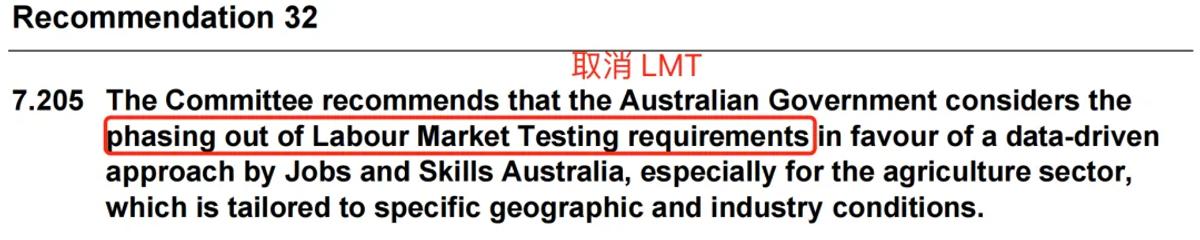
Finally, the report puts forward a series of recommendations addressing Australia’s current labour shortages, including continuing to prioritise the issuance and implementation of ‘Skills in Demand’ visas, progressively abolishing labour market testing requirements, and amending migration legislation or regulations to explicitly grant the Employment Minister more authority to help address labour shortages. These measures are expected to effectively alleviate labour shortages across various industries in Australia.
03 Conclusion
In summary, the 73 recommendations in this report cover all aspects of migration policy, aiming to comprehensively optimise Australia’s migration system. The implementation of these recommendations will help attract more outstanding talent to settle and work in Australia, injecting new vitality into Australia’s economic development and social progress. We look forward to the effective implementation of these reform recommendations, bringing positive and far-reaching changes to Australia’s migration policy.